
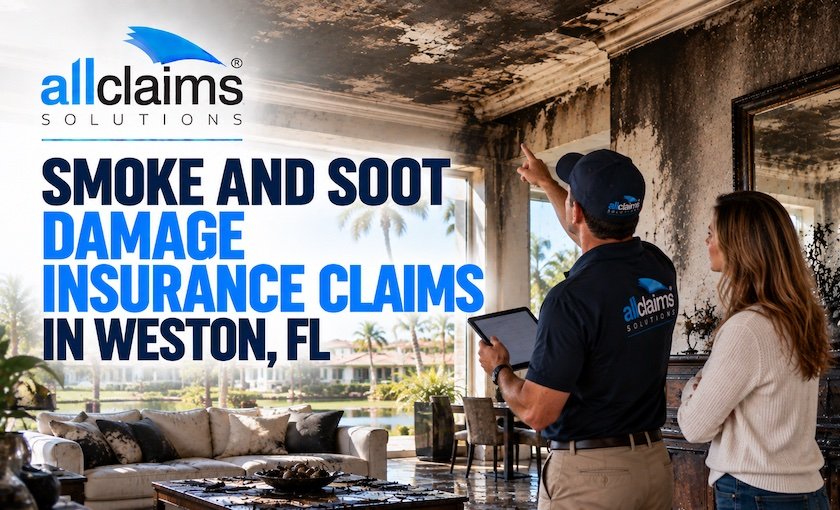
A fire can cause extensive damage even in areas of a property that were never touched directly by flames.
Smoke can travel through rooms, ventilation systems, walls, ceilings, and other areas of a property. Soot can settle on surfaces, furniture, electronics, fixtures, and personal belongings. Lingering smoke odors may also remain long after the visible damage has been cleaned.
For Weston homeowners and property owners, understanding how smoke and soot damage insurance claims work can be an important part of recovering after a fire-related loss.
Depending on the circumstances and the terms of the policy, fire-related property insurance may address covered damage to the structure and contents. Commercial policies can also have additional considerations for business property and operations. Florida’s Department of Financial Services notes that commercial property insurance generally covers commercial buildings and contents against fire, windstorm, and other covered perils, although policy forms, exclusions, and endorsements vary.
At All Claims Solutions, our licensed Public Adjusters help Weston property owners document, prepare, and present insurance claims involving fire, smoke, soot, and other types of property damage.
What Is Smoke and Soot Damage?
Smoke damage is the physical and chemical damage caused by smoke produced during a fire.
Soot is a residue produced by incomplete combustion. It can settle on surfaces throughout a property and may be difficult to remove without specialized cleaning.
Smoke and soot damage can affect much more than the area where the fire originated.
Depending on the fire and the property, damage may involve:
- Walls and ceilings
- Flooring
- Cabinets
- Furniture
- Appliances
- Clothing
- Electronics
- HVAC systems
- Insulation
- Windows
- Doors
- Fixtures
- Personal belongings
- Business equipment
- Inventory
Smoke can also leave persistent odors that may remain after visible soot has been removed.
This is why a property that appears structurally intact after a fire may still have significant smoke-related damage.
Does Homeowners Insurance Cover Smoke and Soot Damage?
It may, depending on the policy, cause of loss, exclusions, limits, and circumstances.
Smoke and soot damage resulting from a covered fire may be part of a property insurance claim. However, insurance coverage is determined by the actual policy and the facts surrounding the loss.
Important questions can include:
- What caused the fire?
- Where did the fire originate?
- What property was damaged?
- Was the damage caused directly by fire, smoke, soot, heat, or another factor?
- Are there applicable exclusions?
- What deductibles apply?
- Are there policy limits or sublimits?
- Does the policy provide replacement cost or actual cash value coverage?
- Are additional living expenses or other applicable coverages available?
Rather than assuming that all smoke-related damage is automatically covered, property owners should review the policy and document the loss carefully.
Smoke Damage Can Extend Beyond the Fire-Damaged Area
One of the most important things Weston property owners should understand is that the location of the fire does not necessarily define the extent of the insurance claim.
Imagine a fire starts in a kitchen.
The flames may be contained to that area, but smoke can travel into:
- Bedrooms
- Hallways
- Living areas
- Attics
- Closets
- HVAC ducts
- Garages
- Storage areas
Smoke may leave residue on surfaces that do not appear severely damaged at first.
In some cases, smoke can also affect materials and belongings through odor, staining, corrosion, or contamination.
This makes thorough documentation particularly important.
Common Types of Smoke and Soot Damage
1. Visible Soot
Soot may appear as black, gray, brown, or oily residue depending on the materials that burned and the type of fire.
It can accumulate on:
- Walls
- Ceilings
- Furniture
- Appliances
- Cabinets
- Windows
- Fixtures
Visible soot is usually easier to identify than hidden smoke damage, but it should still be professionally documented.
2. Smoke Odor
Smoke odors can remain long after the fire has been extinguished.
Odors may become trapped in:
- Carpeting
- Upholstery
- Drapes
- Clothing
- Wood
- Insulation
- HVAC systems
- Other porous materials
Simply painting over a surface or using an air freshener does not necessarily address the source of a persistent smoke odor.
3. HVAC and Ventilation Damage
HVAC systems can distribute smoke throughout a property.
Smoke and soot may enter:
- Air ducts
- Filters
- Vents
- Air handlers
- Other HVAC components
Because these systems can affect multiple rooms, they should be evaluated when appropriate after a significant smoke event.
4. Damage to Electronics
Smoke and soot can affect electronics and other sensitive equipment.
Potentially affected items may include:
- Televisions
- Computers
- Networking equipment
- Security systems
- Appliances
- Audio equipment
- Office technology
In some situations, electronics may require specialized evaluation before they can safely be returned to service.
5. Damage to Personal Belongings
Smoke damage can affect personal property even when the items were not directly exposed to flames.
Examples include:
- Clothing
- Furniture
- Books
- Artwork
- Kitchenware
- Mattresses
- Children’s items
- Decorative items
- Important documents
A detailed inventory can help establish what was affected.
Hidden Smoke Damage: Why It Matters
Visible damage is only part of the picture.
Smoke can move into areas that are difficult to inspect without opening or examining certain components of the property.
Potentially affected areas may include:
- Behind walls
- Above ceilings
- Inside cabinets
- Attics
- Insulation
- HVAC systems
- Electrical components
- Crawl spaces
- Closets
For this reason, a smoke damage claim should not necessarily be based only on what can be seen immediately after the fire.
A professional inspection and appropriate documentation can help establish the scope of the loss.
What Should You Do After Smoke or Soot Damage?
After a fire, safety should come first.
Once the property is considered safe to enter, Weston property owners can begin documenting the condition of the property.
1. Contact Your Insurance Company
Notify the insurance company according to the requirements of your policy.
Florida DFS recommends reporting property damage promptly, documenting the damage, making reasonable temporary repairs, creating an inventory of damaged items, and keeping receipts related to repairs.
2. Photograph and Video Everything
Take photographs and videos before significant cleaning or restoration whenever circumstances safely allow.
Document:
- The fire-damaged area
- Smoke residue
- Soot
- Ceilings
- Walls
- Floors
- Furniture
- Appliances
- Electronics
- Personal belongings
- HVAC components
- Exterior areas
Wide photographs can establish the overall condition, while close-up images can document specific damage.
3. Create a Personal Property Inventory
Do not focus only on the building.
Create a list of affected belongings, including:
- Description
- Quantity
- Approximate age
- Purchase information
- Photographs
- Receipts when available
- Serial numbers when applicable
This can be particularly important when smoke has affected a large number of belongings.
4. Keep Receipts
Save receipts for reasonable expenses associated with the loss.
Depending on the circumstances and policy, these could include expenses related to:
- Emergency services
- Temporary repairs
- Cleaning
- Storage
- Temporary accommodation
- Replacement necessities
- Restoration
Keep records organized in a dedicated claim file.
Should You Clean Smoke and Soot Damage Before Filing a Claim?
Property owners may need to take reasonable steps to prevent additional damage.
However, extensive cleaning can also change the original condition of the property.
Florida DFS advises policyholders to photograph damage, make emergency or temporary repairs, keep receipts, and avoid discarding damaged items without prior approval from the insurance company.
A practical approach is to:
- Prioritize safety.
- Prevent additional damage when reasonably necessary.
- Document the condition thoroughly.
- Keep records of emergency work.
- Preserve damaged items when feasible.
- Coordinate permanent restoration appropriately.
If a damaged item presents a health or safety hazard, appropriate safety measures should take priority.
Common Smoke and Soot Insurance Claim Mistakes
Mistake #1: Assuming Only the Burned Area Matters
Smoke can affect areas far beyond where the fire occurred.
Document the entire property.
Mistake #2: Ignoring Smoke Odor
A property may look clean while persistent smoke odor remains in porous materials, HVAC systems, or other components.
Mistake #3: Forgetting Personal Property
Furniture, clothing, electronics, appliances, and other belongings may be affected even when they were not directly burned.
Mistake #4: Cleaning Everything Before Documentation
Cleaning can make it harder to establish the original condition of damaged surfaces and belongings.
Document first whenever safely possible.
Mistake #5: Throwing Away Damaged Items
Florida DFS specifically advises policyholders not to discard damaged items without prior approval from the insurance company.
Mistake #6: Accepting a Scope That Doesn’t Reflect the Full Damage
A fire claim may involve more than rebuilding the area where the fire started.
Smoke, soot, odor, HVAC, contents, and other related damage may need to be evaluated.
Mistake #7: Forgetting About Additional Damage
Damage can become apparent during cleaning, demolition, or restoration.
Document newly discovered damage and communicate it appropriately.
How Long Do You Have to File a Smoke Damage Insurance Claim in Florida?
Under the current 2026 Florida Statutes, a property insurance initial claim or reopened claim generally must be reported within one year after the date of loss, while a supplemental claim generally must be reported within 18 months. The notice must also comply with the applicable policy requirements.
These deadlines make timely action important.
However, the applicable policy, date of loss, type of claim, and specific circumstances should always be considered.
If you are unsure whether you are still within the applicable timeframe, consider reviewing the matter promptly with your insurer or an appropriately licensed professional.
Can You File a Smoke Damage Claim After the Fire Was Already Repaired?
It depends on the circumstances.
For example, additional smoke or soot damage may become apparent during restoration.
Florida law distinguishes between reopened claims and supplemental claims, with specific notice periods applying to each.
If additional damage is discovered, property owners should document:
- What was discovered
- Where it was found
- When it was discovered
- Photographs
- Contractor or restoration documentation
- Additional repair estimates
- Related expenses
Do not assume that newly discovered damage should simply be absorbed into the original repair budget.
Smoke and Soot Damage in Weston: Residential and Commercial Claims
Smoke damage can affect both homes and businesses.
Residential Properties
Homeowners may have to address:
- Structural damage
- Personal belongings
- Smoke odor
- Furniture
- Appliances
- Temporary living arrangements
- Cleaning and restoration
The exact coverage depends on the policy.
Commercial Properties
Businesses can face additional complications involving:
- Business personal property
- Equipment
- Inventory
- Commercial contents
- Temporary relocation
- Business operations
- Potential business income losses
Commercial property insurance can be more complex because commercial policies may contain a larger number of forms, endorsements, coverage provisions, and exclusions.
For businesses, the claim may therefore involve both physical property damage and operational consequences.
When Should You Consider Hiring a Public Adjuster for Smoke Damage?
Not every smoke damage claim requires professional claim assistance.
However, a property owner may consider working with a licensed public adjuster when the loss is:
- Extensive
- Difficult to document
- Affecting multiple rooms
- Affecting personal property
- Involving significant smoke or soot contamination
- Involving HVAC systems
- Involving business property
- Disputed with the insurance company
- Underpaid
- Denied
- Complex or time-consuming
A public adjuster represents the policyholder rather than the insurance company. Florida DFS explains that public adjusters can assist with claim documentation, forms, filing requirements, and presenting the claim to the insurer. Public adjusters must be licensed in Florida.
Importantly, hiring a public adjuster does not guarantee a higher payout or faster claim handling.
What Does a Public Adjuster Do With a Smoke Damage Claim?
A licensed public adjuster may assist with several parts of the claims process.
Property Inspection
The property is evaluated to identify and document the scope of the damage.
Damage Documentation
Photographs, videos, inventories, estimates, and other documentation can be organized to support the claim.
Policy Review
The applicable policy provisions can be reviewed to identify potentially relevant coverage.
Claim Preparation
The documented loss can be organized and presented as part of the insurance claim.
Communication With the Insurance Company
A public adjuster can act as the policyholder’s representative during the claims process.
Claim Negotiation
The public adjuster can present and discuss the documented claim with the insurance company.
Florida DFS confirms that a public adjuster represents the policyholder during the insurance claims process rather than the insurance company.
How All Claims Solutions Helps With Smoke and Soot Claims in Weston
At All Claims Solutions, we work for policyholders—not insurance companies.
Our licensed Public Adjusters can assist Weston property owners with complex property insurance claims involving:
- Smoke damage
- Soot damage
- Fire damage
- Water damage following firefighting
- Structural damage
- Personal property damage
- Commercial property damage
- Additional or supplemental damage
Our process focuses on understanding the documented loss, reviewing the applicable policy, preparing the claim, and representing the policyholder during the insurance process.
What to Have Ready for a Smoke Damage Insurance Claim
If you are preparing a smoke or soot damage claim, gather as much of the following as possible:
Property Documentation
- Photos
- Videos
- Previous property photographs
- Inspection reports
- Repair records
Personal Property
- Inventory
- Receipts
- Purchase records
- Photographs
- Serial numbers
Insurance Information
- Current policy
- Declarations page
- Previous claim information
- Insurance correspondence
Restoration Documentation
- Fire department report
- Restoration invoices
- Cleaning estimates
- Contractor estimates
- Temporary repair receipts
Communication
- Emails
- Letters
- Claim numbers
- Adjuster communications
- Inspection dates
- Notes from conversations
Smoke and Soot Damage Insurance Claims: A Practical Checklist
After a fire:
☐ Prioritize safety
☐ Notify your insurance company
☐ Photograph and video the property
☐ Document smoke and soot throughout the property
☐ Inventory affected belongings
☐ Document HVAC and ventilation concerns
☐ Keep receipts and invoices
☐ Make reasonable temporary repairs when necessary
☐ Avoid unnecessary disposal of damaged items
☐ Keep copies of all insurance correspondence
☐ Document additional damage discovered during restoration
☐ Review the insurance estimate carefully
☐ Consider professional claim assistance for complex losses
Final Thoughts for Weston Property Owners
Smoke and soot damage can be more extensive than what is visible immediately after a fire.
A property may have damage to walls, ceilings, contents, electronics, HVAC systems, flooring, furniture, and other components even when flames were limited to one area.
The key is to document the loss thoroughly, act within applicable deadlines, preserve important evidence and records, and understand what the insurance policy actually provides.
If your Weston property has experienced smoke, soot, or fire-related damage, All Claims Solutions can help you understand the insurance claim process and evaluate the documented loss.
Get a Free Insurance Claim Evaluation
All Claims Solutions works for you—not insurance companies.
Frequently Asked Questions
Smoke damage may be covered when it results from a covered cause of loss, such as a covered fire. Coverage depends on the specific policy, exclusions, deductibles, limits, and circumstances of the loss.
Soot damage may be included as part of a covered fire-related property loss, depending on the applicable policy and circumstances. The extent of the damage should be properly documented.
Yes. Smoke can travel throughout a property and affect rooms, contents, ventilation systems, and other areas beyond the location where the fire originated.
Potentially. Persistent smoke odor can affect porous materials and other parts of a property. Whether related cleaning, restoration, or replacement costs are covered depends on the policy and circumstances.
Florida DFS advises policyholders not to discard damaged items without prior approval from the insurance company. Document damaged property and preserve it when reasonably possible.
Under current Florida law, an initial or reopened property insurance claim generally must be reported within one year after the date of loss, while a supplemental claim generally must be reported within 18 months, subject to the applicable policy and circumstances.
A licensed public adjuster represents the policyholder and can assist with documenting, preparing, and presenting an insurance claim. Florida DFS confirms that public adjusters do not represent the insurance company.
No. Florida DFS specifically states that hiring a public adjuster does not guarantee a higher claim payout or expedited claim handling.
Need Help With Insurance Claims in Weston FL
This article is for general informational purposes only and does not constitute legal advice or a determination of insurance coverage. Insurance coverage depends on the specific policy, endorsements, exclusions, deductibles, limits, and circumstances of the loss. Florida insurance laws and requirements may change.
Schedule Your Free Property Inspection
All Claims Solutions – Weston, FL
📍 2645 Executive Park Dr. Suite 629, Weston, FL 33331
📞 (954) 622-0088
allclaimssolutions.com
Types of Claims in Weston FL
Water Damage >
Fire Damage >
Storm Damage >
Flood Damage >
Mold damage >
Structural Damage >